
“And he said unto him, Son, thou art ever with me, and all that I have is thine.
It was meet that we should make merry, and be glad: for this thy brother was dead, and is alive again; and was lost, and is found.”
Luke 15:31-32 KJV
https://www.bible.com/1/luk.15.31-32.kjv
Rembrandt Harmensz. van Rijn. 1606-1669
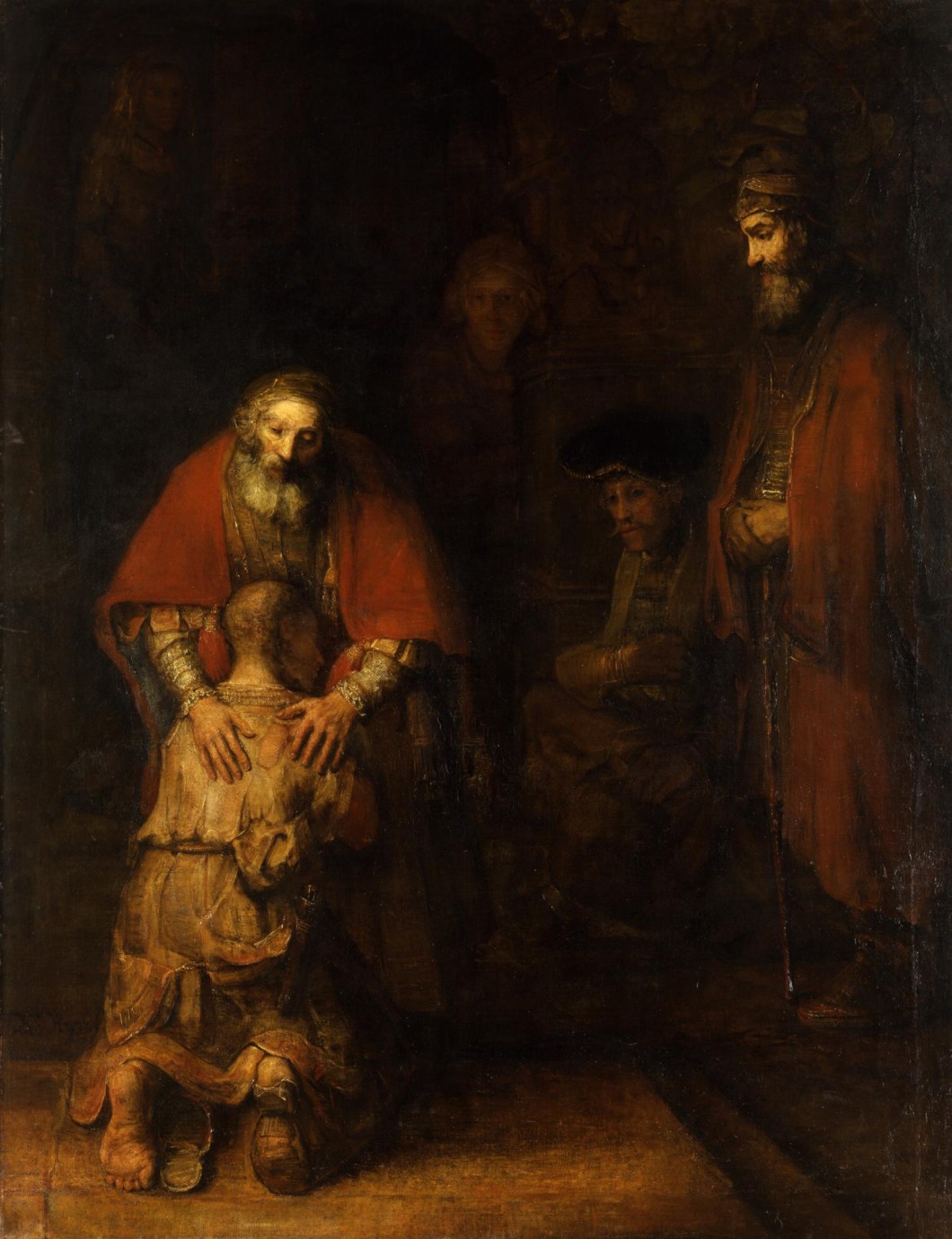
Return of the Prodigal Son
Holland, circa 1668
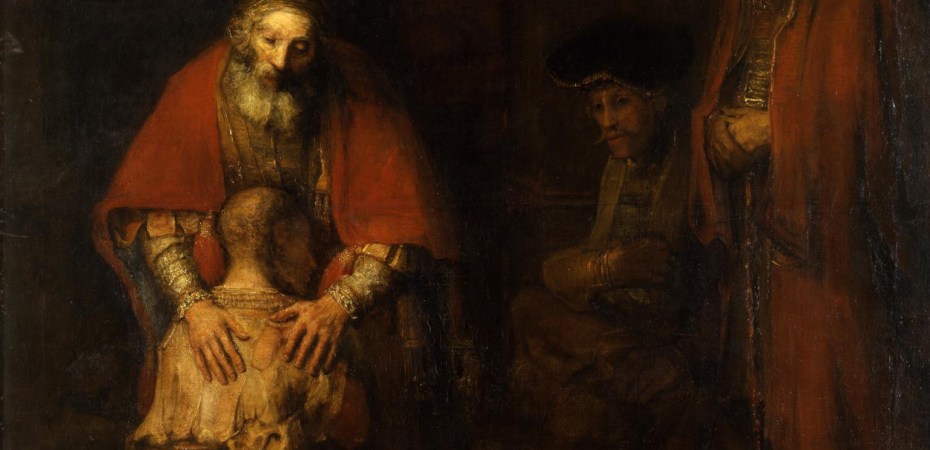
In the Gospel According to Luke (15: 11-32), Christ relates the parable of the prodigal son. A son asks his father for his inheritance and leaves the parental home, only to fritter away all his wealth. Arriving at last at sickness and poverty, he returns to his father’s house. The old man is blinded by tears as he forgives his son, just as God forgives all those who repent. This whole work is dominated by the idea of the victory of love, goodness and charity. The event is treated as the highest act of human wisdom and spiritual nobility, and it takes place in absolute silence and stillness. The drama and depth of feeling are expressed in the figures of both father and son, with all the emotional precision with which Rembrandt was endowed. The broad, sketchy brushstrokes of the artist’s late style accentuate the emotion and intensity of this masterly painting. This parable in Rembrandt?s treatment is addressed to the heart of everyone: “We should be glad: for this son was dead, and is alive again; and was lost, and is found.”
Author:
Rembrandt Harmensz. van Rijn. 1606-1669
Title:
Return of the Prodigal Son
Place:
Holland
Date:
circa 1668
Material:
canvas
Technique:
oil
Dimensions:
262×205 cm
Acquisition date:
Entered the Hermitage in 1766; formerly in the collection of Catherine the Great
Inventory Number:
ГЭ-742
Category:
Painting
Collection:
European Fine Art
Subcollection:
Dutch Painting of the 17th-18th Centuries
 jesus-works.com